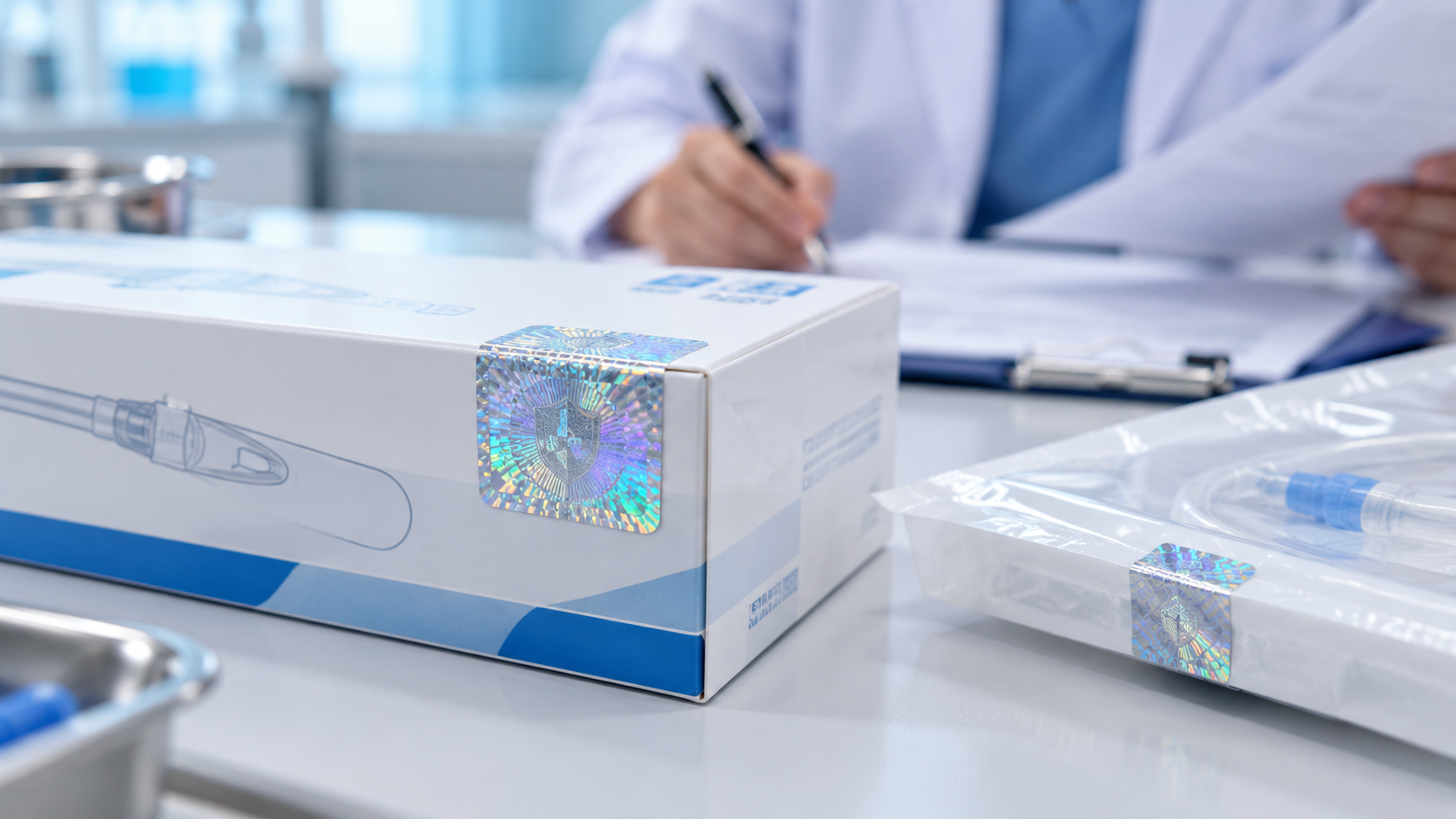
The MDA Hologram Security Label (HSL) is an authentication system that is going to be mandatory on medical devices sold in Malaysia, phased introduction commencing from 2026. The HSL was announced on 5 August 2026 and officially launched at IMDEC on 26 August 2026. The MDA HSL has been inspired by the successful Farmatag system, used since 2005 to authenticate pharmaceutical products sold in Malaysia. It enables patients and healthcare professionals to confirm whether a particular device is registered with the MDA. Technical specifications, the list of the affected devices and timeline information have not yet been officially published by the MDA.
Malaysia is adding a new layer of product authentication to its medical device regulatory framework. On 5 August 2026, the Ministry of Health and the Medical Device Authority announced that registered medical devices will be required to carry a Hologram Security Label, to be introduced in phases. The official launch was made by the Minister of Health at the International Medical Device Exhibition and Conference (IMDEC 2026) on 26 August 2026.
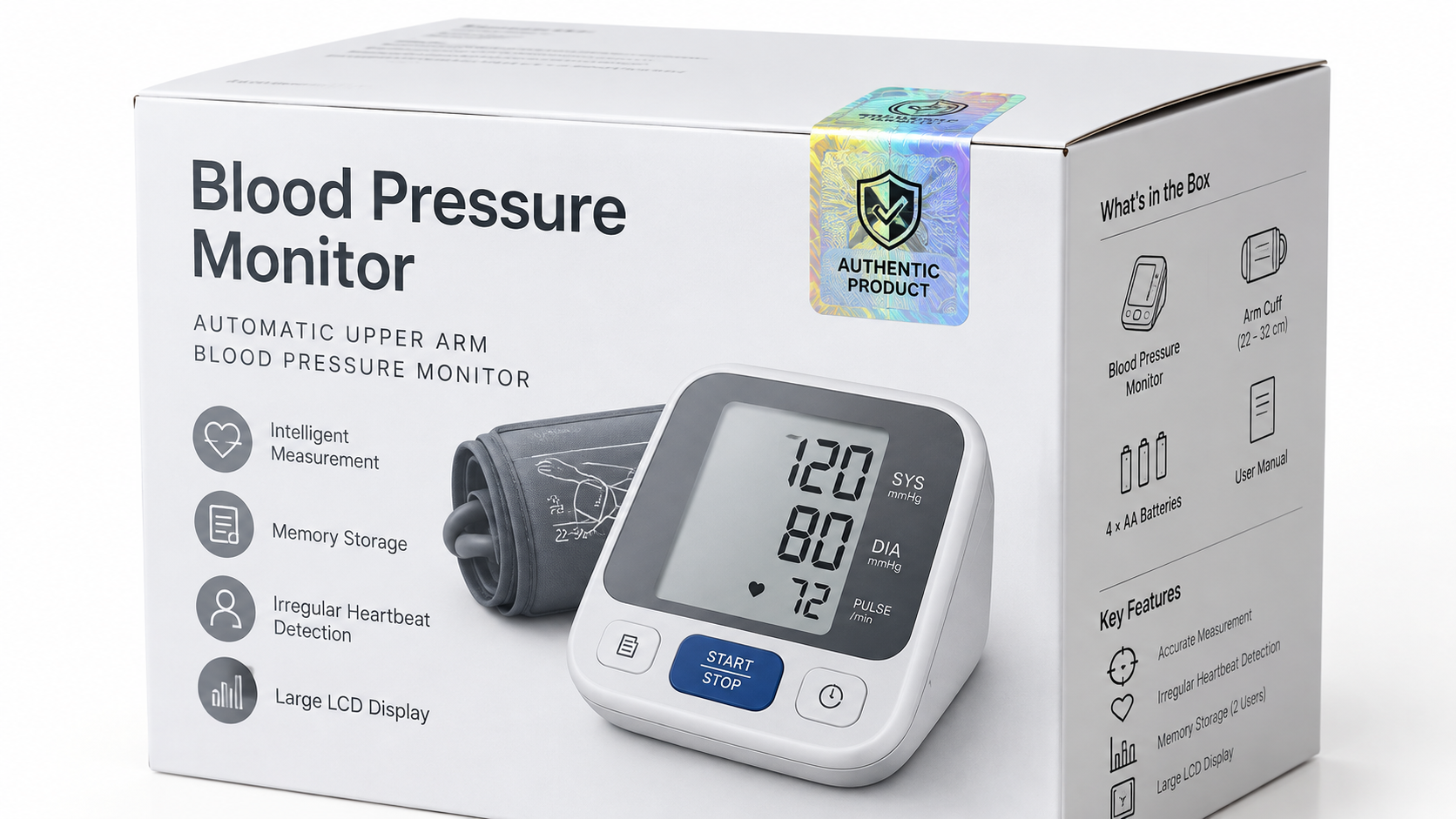
For manufacturers with devices already registered in Malaysia, and for those planning market entry, this is a development that will directly affect labelling, packaging, and supply chain processes. The policy direction is clear. What remains outstanding are the specifics: which devices are in scope, what the hologram looks like and where it must be placed, and when each phase takes effect.
This guide covers everything confirmed about the HSL initiative as of October 2026, what it means for manufacturers, and how to prepare without getting ahead of requirements that have not yet been formally published. For context on the existing labelling framework, see our guide on how to register a medical device in Malaysia.
Key Takeaways
- The MDA Hologram Security Label (HSL) was announced on 5 August 2026 and officially launched at IMDEC on 26 August 2026. Implementation will be phased.
- The HSL is modelled on Malaysia's Farmatag pharmaceutical hologram, which has been in use since 2005 and is already familiar to Malaysian consumers and healthcare professionals.
- The HSL is designed to help consumers and healthcare professionals verify that a device is registered with the MDA, and to strengthen enforcement against counterfeit and unregistered devices.
- Devices likely to be prioritised in the first phase include consumer-facing diagnostic devices (glucose monitors, blood pressure monitors, pulse oximeters) and high-risk life-sustaining implantable devices.
- Specific technical requirements, the list of affected devices, placement rules, and phase timelines have not yet been formally published by the MDA as of October 2026.
- Manufacturers should NOT modify approved labelling or packaging until formal MDA guidance is published, premature changes risk creating non-conformances with currently approved device specifications.
- The HSL does not replace the existing MDA registration number requirement. Both will coexist as complementary identification mechanisms.
Where the Hologram Security Label Comes From
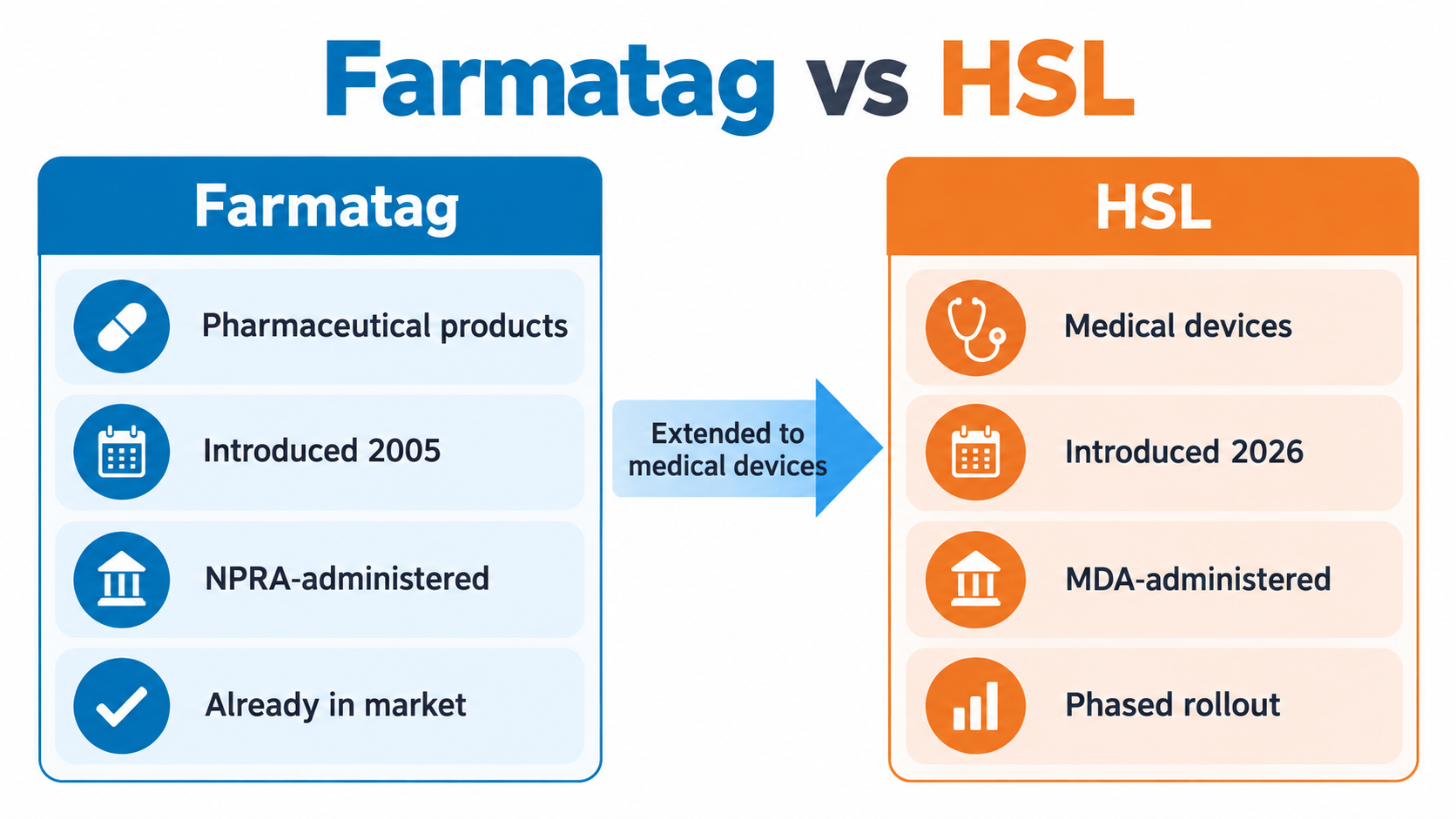
The HSL initiative is not new to Malaysia's healthcare regulatory system. The Ministry of Health introduced the Farmatag hologram security label for pharmaceutical products in 2005, more than two decades ago. Farmatag allows consumers to verify that a medicine is registered with the NPRA and has not been tampered with or counterfeited. Its success in combating counterfeit pharmaceuticals in the Malaysian market was cited by the MDA as the foundation for extending the concept to medical devices.
The medical device context is different from pharmaceuticals in several important ways. The range of device types, form factors, and packaging configurations is far more diverse than pharmaceutical products. A hologram suitable for a glucose meter box is not automatically suitable for a sterile surgical instrument or an implantable pacemaker. This is one of the reasons the MDA has signalled a phased approach rather than a single mandatory date for all devices.
Counterfeit and unregistered medical devices are a real problem in Malaysia's market. Devices sold through informal channels, e-commerce platforms, and grey-market supply chains frequently bypass the MDA registration process entirely. The HSL gives consumers and enforcement officers a fast, visible way to identify whether a device is registered. It also strengthens supply chain traceability, making it easier to identify where non-compliant products entered the distribution network.
The HSL sits within a wider pattern of MDA modernisation in 2026. The same year saw the launch of the Automated Re-Registration Route in MeDC@St 2.0+ (July 2026), a fully online Product Classification Application Process (July 2026), and meetings between MDA and major e-commerce platforms including Lazada and ByteDance (May 2026) to strengthen enforcement of online sales of medical devices. The HSL is the product-level authentication piece of this broader enforcement push.
Malaysia has positioned the HSL as part of its ambition to align its regulatory system with established markets including Japan, Canada, Australia, and Singapore, and to develop as a regional medical device hub by 2030. Product authentication mechanisms are already used by several of these reference markets, and the HSL brings Malaysia closer to the authentication standards expected in a mature regulatory environment.
What the MDA Has Confirmed About the HSL
The MDA's 5 August 2026 press release confirmed the following. Everything beyond this list is either unconfirmed industry commentary or details expected to follow in formal implementation guidance.
The MDA has confirmed that the HSL will be implemented progressively, not as a single mandatory date for all registered devices. Phase scope and timelines are to be determined and announced separately.
The HSL applies to devices registered under the Medical Device Act 2012 (Act 737) via the MDA registration system. The full scope of which device classes and categories will be required to carry the label in which phase has not been published.
The MDA has confirmed that the initiative will be developed and implemented through collaboration between the Ministry of Health, the MDA, and relevant industry stakeholders. Industry input is expected before implementation details are finalised.
The HSL is designed to allow consumers and healthcare professionals to quickly verify that a device is registered with the MDA. Fomca (Federation of Malaysian Consumers Associations) has recommended that the verification result be simple and clear, showing whether the device is registered rather than requiring interpretation of regulatory data.
The Minister of Health formally announced the HSL initiative at the International Medical Device Exhibition and Conference (IMDEC) 2026 on 26 August 2026. Further implementation details are expected to follow in formal MDA guidance documents and circulars.
Which Devices Are Likely to Be Prioritised
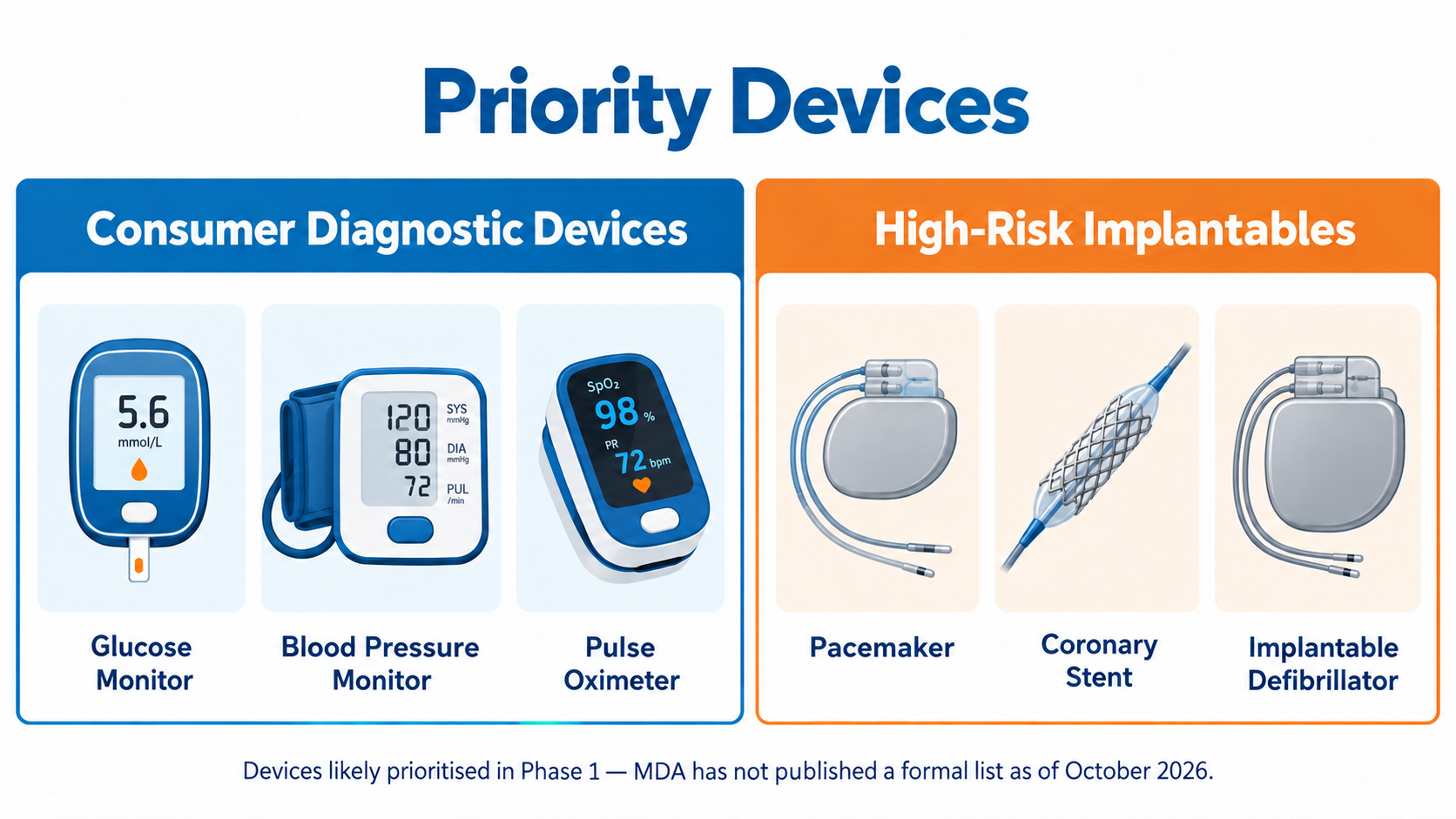
The MDA has not published a formal list of which devices will be required to carry the HSL in the first phase. However, the Malaysian Pharmacists Society (MPS) and industry commentators have indicated which categories are most likely to be prioritised, based on the risk profile and market accessibility of different device types.
Pulse oximeters, blood glucose monitors, and blood pressure monitors were specifically cited by the Malaysian Pharmacists Society as priority candidates. These devices are widely sold through retail stores and e-commerce platforms, making them most exposed to counterfeit and uncalibrated substitutes. A fake glucose monitor that gives incorrect readings could lead to misdiagnosis or delayed emergency care.
Pacemakers, heart valves, implantable defibrillators, coronary stents, and other active implantable devices were highlighted as high-priority candidates. Counterfeit or defective implantable devices can cause immediate fatality or severe disability, making authentication at the product level an important additional safeguard in the supply chain.
The MDA's engagement with Lazada and ByteDance (TikTok Shop) in May 2026 highlighted the e-commerce channel as a significant vector for unregistered device sales. Devices in categories frequently sold online are likely to be prioritised for the HSL, since the label provides a verification mechanism that e-commerce buyers can use without relying on vendor claims.
Key Dates and What to Expect Next
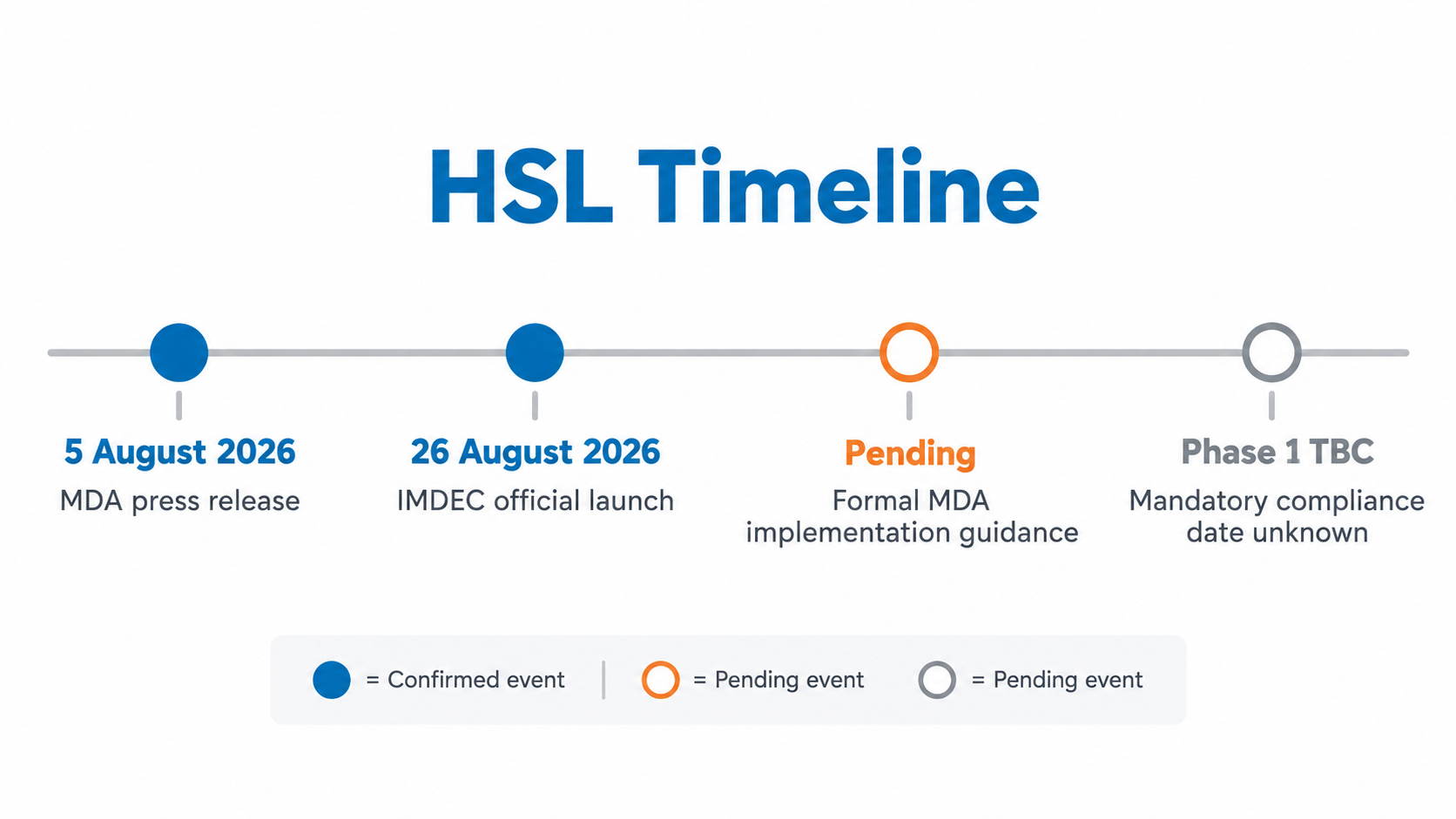
The Ministry of Health and MDA published the official press release confirming the phased implementation of the Hologram Security Label for registered medical devices.
The Minister of Health formally launched the HSL initiative at the International Medical Device Exhibition and Conference in Kuala Lumpur, signalling the government's commitment to the programme.
Technical specifications, device scope, placement requirements, phase timelines, and responsibilities for manufacturers, LARs, importers, and distributors are expected in formal MDA guidance documents. No publication date has been confirmed.
The first phase of mandatory HSL compliance will apply to the device categories announced in the formal guidance. Transition timelines for existing registered products and for new submissions are expected to be specified at this stage.
How Manufacturers Should Prepare
Formal requirements have not been published, so there is a clear boundary between preparation and premature action. The right response now is to prepare internally without making any changes to approved labelling or packaging.
What This Means for Your Local Authorised Representative
As the legally responsible entity for a registered device in Malaysia, the Local Authorised Representative will be a key party in the HSL implementation process once formal requirements are published. The LAR's role is likely to include:
Any labelling change required by the HSL will need to go through the MDA's Change Notification process. The LAR manages all Change Notification submissions in Malaysia via MeDC@St 2.0+. Manufacturers should ensure their LAR is briefed on the HSL initiative and prepared to coordinate the change notification process once formal requirements are published.
If the MDA specifies that the HSL is required from a certain date, existing registered products already in the supply chain may need to be managed carefully during any transition period. The LAR, as the entity responsible for distribution records and supply chain management in Malaysia, will need to coordinate this with importers and distributors.
The MDA typically communicates implementation requirements via its official portal, guidance documents, and circulars. The LAR should be actively monitoring these channels and sharing relevant updates with the manufacturer promptly. A LAR who is slow to communicate regulatory developments creates unnecessary preparation time pressure.
TT Medical's Role in HSL Compliance
TT Medical is actively monitoring MDA communications on the HSL initiative. As your Local Authorised Representative, we will notify you as soon as formal implementation guidance is published, coordinate any Change Notification submissions required for labelling updates, and advise on the transition process for your specific registered devices.
If you are not yet registered in Malaysia or are evaluating your current LAR arrangement ahead of the HSL rollout, contact our team to discuss your situation.
FAQ